

公司新闻
卡式炉
Cassette Stoves: Compact Cooking Gains Popularity and Scrutiny
Portable cassette stoves, the self-contained cooking devices that run on replaceable butane canisters, are enjoying a significant surge in popularity among outdoor enthusiasts, household users, and small-scale food businesses. Known for their compact design and ease of operation, these appliances have become indispensable for camping trips, table hotpot meals, and emergency cooking in areas affected by power outages. At the same time, safety concerns relating to gas leaks, canister compatibility, and substandard manufacturing have prompted closer attention from regulators and consumer advocacy groups, making safety awareness an essential complement to the product's convenience.
Versatility Drives Widespread Adoption
The appeal of the cassette stove rests on a deceptively simple engineering concept: a pressurized butane cartridge inserts directly into the stove body, where a locking mechanism secures it and a control valve regulates fuel flow to the burner. This design removes the need for gas hoses, wall-mounted regulators, or permanent installation, enabling users to cook virtually anywhere a flat, heat-resistant surface is available. The devices have found particularly strong demand in Asian markets, where indoor hotpot culture relies heavily on table cooking equipment. They are likewise valued by campers and hikers, who need reliable flame-based cooking capabilities without the weight and complexity of traditional gas systems.
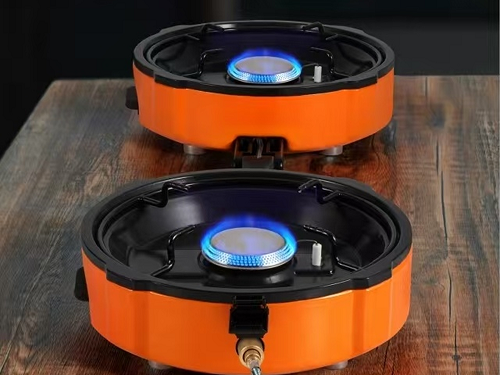
In recent seasons, market watchers have noted a broadening of the product category. Entry-level stoves continue to attract first-time buyers, while premium models increasingly incorporate reinforced burner heads, wind-resistant flame guards, and temperature-limiting sensors. Some new-generation devices support multiple fuel types, giving users the option to switch between butane canisters and propane bottles depending on availability and ambient temperature. This product diversification reflects a growing expectation that cassette stoves should perform consistently across a wide range of environments and use scenarios.
Safety Risks and Hidden Vulnerabilities
Despite their convenience, cassette stoves are not without technical weaknesses. The connection between the canister and the stove's gas valve must remain completely leak-proof throughout the appliance's life; even minor roughness on the sealing surface can lead to fuel escaping into the surrounding environment. When a gas leak occurs indoors, it creates a serious risk of fire or explosion as soon as the stove is lit or a nearby ignition source is introduced. In confined spaces, incomplete combustion can generate carbon monoxide, posing an acute hazard to people in the vicinity.
Canister compatibility is another frequently cited concern. Although a degree of standardization exists in certain markets, the valves and pressure characteristics of butane cartridges can differ from one brand to another. Using a mismatched canister can result in poor alignment, weak sealing, or excessive pressure, each of which increases the chance of malfunction. Authorities have repeatedly flagged such cross-brand mismatches as a cause of incidents, underscoring the need for users to follow manufacturers' compatibility guidance.
Experts also draw attention to the differing quality standards of low-cost products. Established stove makers generally invest in protective features such as pressure-relief valves, flame-failure shut-off mechanisms, and protective heat shields. However, unbranded or illegally produced stoves sold at aggressive price points may omit these safeguards entirely. Likewise, counterfeit canisters may use thinner steel, weaker valves, or improperly compressed gas—design flaws that may be invisible to the eye yet ominous in their potential consequences. Key points raised by safety authorities include:
- Always verify that the stove and the canister belong to the same brand or carry explicit compatibility approvals.
- Inspect the valve area before every use, checking for dirt, rust, deformation, or a lingering gas smell.
- Use the stove in open, ventilated spaces, and never place it on plastic tables, cloth surfaces, or other materials that can melt or catch fire.
- Refrain from using or storing cassette stoves near direct sunlight, radiators, or car interiors during hot weather, as heat can raise internal canister pressure.
- Dispose of empty canisters according to local regulations, ensuring that no residual gas remains before recycling.
Regulators and Manufacturers Respond
Stricter oversight has gradually reshaped the cassette stove market. Regulatory agencies in multiple regions have implemented more demanding test protocols for gas cartridges, requiring proof of resistance to impact, high temperature, and prolonged storage. New labeling rules increasingly oblige manufacturers to state maximum burner power, recommended canister types, shelf life, and safe clearance distances from combustible objects. Random market inspections have also intensified, targeting both physical retail stores and online distribution platforms that carry unverified gas appliances.
The manufacturing sector has responded with deliberate improvements. Valves with pressure-relief functionality are becoming more standard, even in mid-range products. Tamper-proof locking systems now make incorrect insertion of a canister noticeably harder, reducing user error. Some advanced stoves incorporate an automatic shut-off that triggers when the canister temperature exceeds a safe threshold. Meanwhile, consumer education has become a competitive differentiator: several brands now include illustrated guides and online video tutorials explaining the correct assembly sequence, ignition procedure, and emergency response steps.
A Future Focused on Safer Convenience
Industry projections suggest that portable cassette stoves will remain a mainstay in outdoor and table cooking for the foreseeable future. With the continued recovery of travel and leisure activities and the deep-rooted cultural preference for communal hotpot meals, demand is likely to stay robust. Technological evolution is expected to bring even better control and safety to these appliances, including options such as automatic tipping detection, wireless shut-off commands, and improved combustion efficiency that reduces both fuel consumption and hazardous emissions.
Nevertheless, the device's long-term reputation will be shaped less by features alone and more by the everyday habits of users. A cassette stove is only as safe as its operator and its fuel. Choosing certified products, maintaining cleanliness, respecting ventilation, and matching the correct canister are not secondary matters; they are fundamental practices that uphold the stove's utility in daily life.
In the end, the cassette stove embodies a fine balance between simplicity and risk. Its simple mechanism offers enormous practical value, yet each use relies on sound engineering and careful handling. As regulatory standards tighten and manufacturers pursue safer designs, the appliance is positioned to become an even more trustworthy companion for kitchens, campsites, and everywhere between. For consumers, the message from safety experts remains uniform: informed use is safe use.